Special Occasions · Pan-India · 4 min read
Jalebi: The Crisp, Syrup-Soaked North Indian Sweet
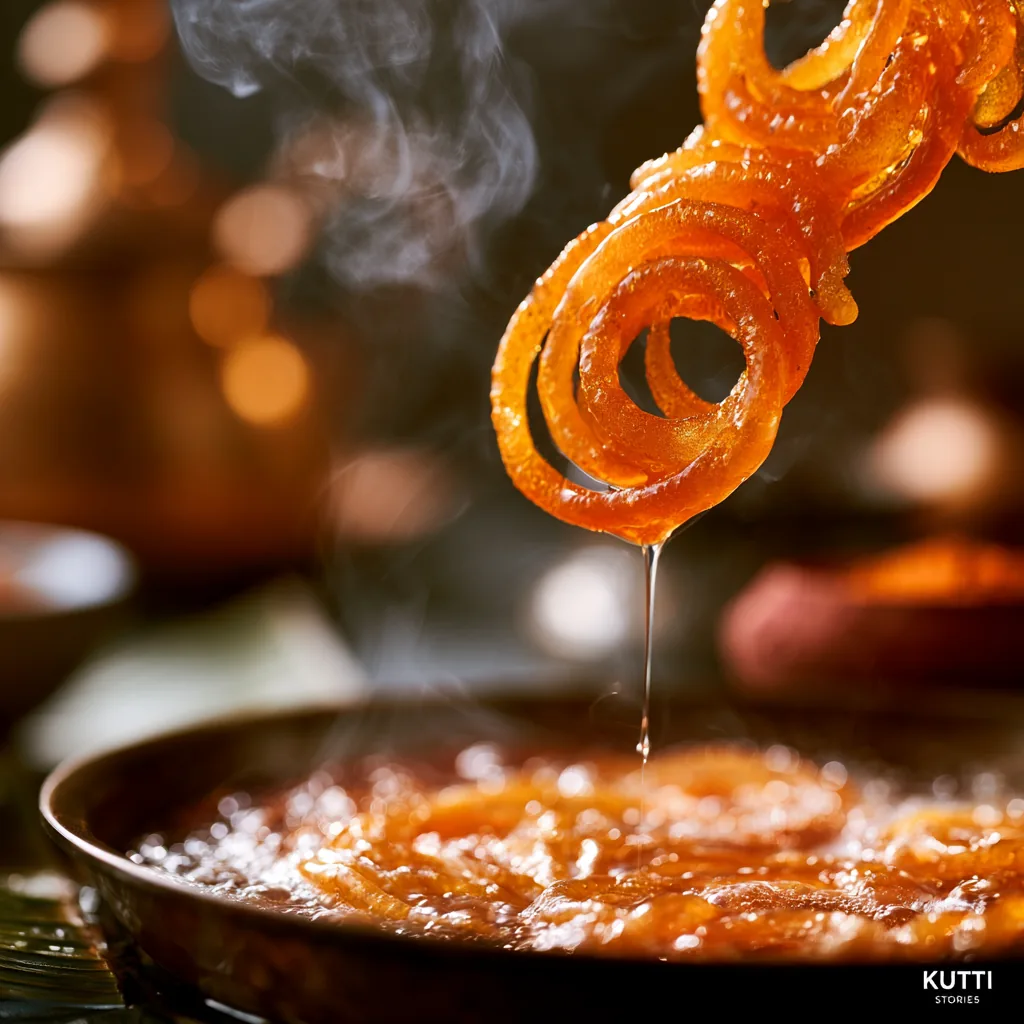
A shatteringly crisp coil that vacuums up warm syrup — the physics of the sugar sponge.
Read alongside: Mysore Pak, Marwari Thali and Annadanam.
History
The vibrant orange coils of jalebi turn up everywhere — hot at a wedding reception, or paired with cold rabdi at a festival. The goal never changes: a shatteringly crisp shell that gives way to a burst of liquid sugar.
Practical Reason
It's fermentation and capillary action. The maida batter is fermented overnight; wild yeast produces lactic acid, giving real jalebi its faint tang that cuts the sweetness. Piped into hot oil, escaping carbon dioxide builds a rigid, hollow, porous starch network.
Modern Science
The magic is the soak. Dropped into warm syrup (chasni), the rigid starch matrix acts like a microscopic sponge, drawing heavy syrup into its air pockets without collapsing the crust. Too-hot syrup makes it soggy; too-cold and the capillary action fails, leaving it dry — the whole craft is in the syrup's temperature.
Recipe
Quick jalebi
Makes ~20 · Ferment ahead
Ingredients
- 1 cup maida (with a little besan)
- 1/2 cup curd + water, to a thick batter
- Pinch of saffron or turmeric for colour
- 1.5 cups sugar
- Cardamom, saffron, oil or ghee
Method
- Whisk a thick pouring batter and ferment 8–12 hours until slightly sour and bubbly.
- Boil sugar and water to a one-string syrup; keep warm with cardamom and saffron.
- Pipe the batter in spirals into medium-hot oil and fry crisp and golden.
- Dip the hot coils in warm (not hot) syrup 20–30 seconds, then lift out.
Say it right
Jalebi
juh-LAY-bee
syrup-soaked fried coils
Chasni
CHUSH-nee
sugar syrup
Crisp on the outside, molten within — jalebi hides its sweetness until the very first bite.
FAQ
Frequently asked questions
Where does Jalebi come from?
A shatteringly crisp coil that vacuums up warm syrup — the physics of the sugar sponge. It belongs to the Special Occasions tradition of Pan-India.
What is the history of Jalebi?
The vibrant orange coils of jalebi turn up everywhere — hot at a wedding reception, or paired with cold rabdi at a festival. The goal never changes: a shatteringly crisp shell that gives way to a burst of liquid sugar.
Why is Jalebi done this way?
It's fermentation and capillary action. The maida batter is fermented overnight; wild yeast produces lactic acid, giving real jalebi its faint tang that cuts the sweetness. Piped into hot oil, escaping carbon dioxide builds a rigid, hollow, porous starch network.
What does modern science say about Jalebi?
The magic is the soak. Dropped into warm syrup (chasni), the rigid starch matrix acts like a microscopic sponge, drawing heavy syrup into its air pockets without collapsing the crust. Too-hot syrup makes it soggy; too-cold and the capillary action fails, leaving it dry — the whole craft is in the syrup's temperature.
How do you make Quick jalebi?
Makes ~20 · Ferment ahead. Ingredients: 1 cup maida (with a little besan), 1/2 cup curd + water, to a thick batter, Pinch of saffron or turmeric for colour, 1.5 cups sugar, Cardamom, saffron, oil or ghee. Method: Whisk a thick pouring batter and ferment 8–12 hours until slightly sour and bubbly. Boil sugar and water to a one-string syrup; keep warm with cardamom and saffron. Pipe the batter in spirals into medium-hot oil and fry crisp and golden.
Can Joy Events & Catering serve Jalebi at my wedding in Chennai?
Yes. We cook traditional Special Occasions menus for 25 to 5,000 guests across Chennai and Tamil Nadu, including live counters and banana-leaf service. Share your date and guest count on our enquiry form and we will build a menu around it.
Related chapters
Where Jalebi leads next
Mysore Pak: The Ghee-Rich Sweet of Karnataka
The South's ghee-heavy answer to a fried sweet
Three ingredients, a hundred chances to fail — the high-wire emulsion of the royal kitchen.
Regional TablesMarwari Thali
The thali it usually arrives on
An opulent desert feast that learned to cook with everything but water.
CeremoniesAnnadanam: The Sacred Act of Feeding Wedding Guests
From the same table in Pan-India
Feeding every guest is not hospitality alone — it's treated as a sacred act.
Special OccasionsSakkarai Pongal: The Sweet Pongal of Celebration
More from Special Occasions
The dish designed to boil over — because overflow means overflowing prosperity.
Want this on your table?
We cook these traditions for 25 to 5,000 guests across Chennai.
Get a quote →Bring this tradition to your celebration
Joy Events & Catering recreates authentic Tamil wedding and family feasts
We cook across Chennai, from intimate gatherings to large celebrations — traditional banana-leaf feasts, live counters and custom menus for 25 to 5,000 guests.