Nasrani Wedding · Kerala · 4 min read
An Aramaic Memory
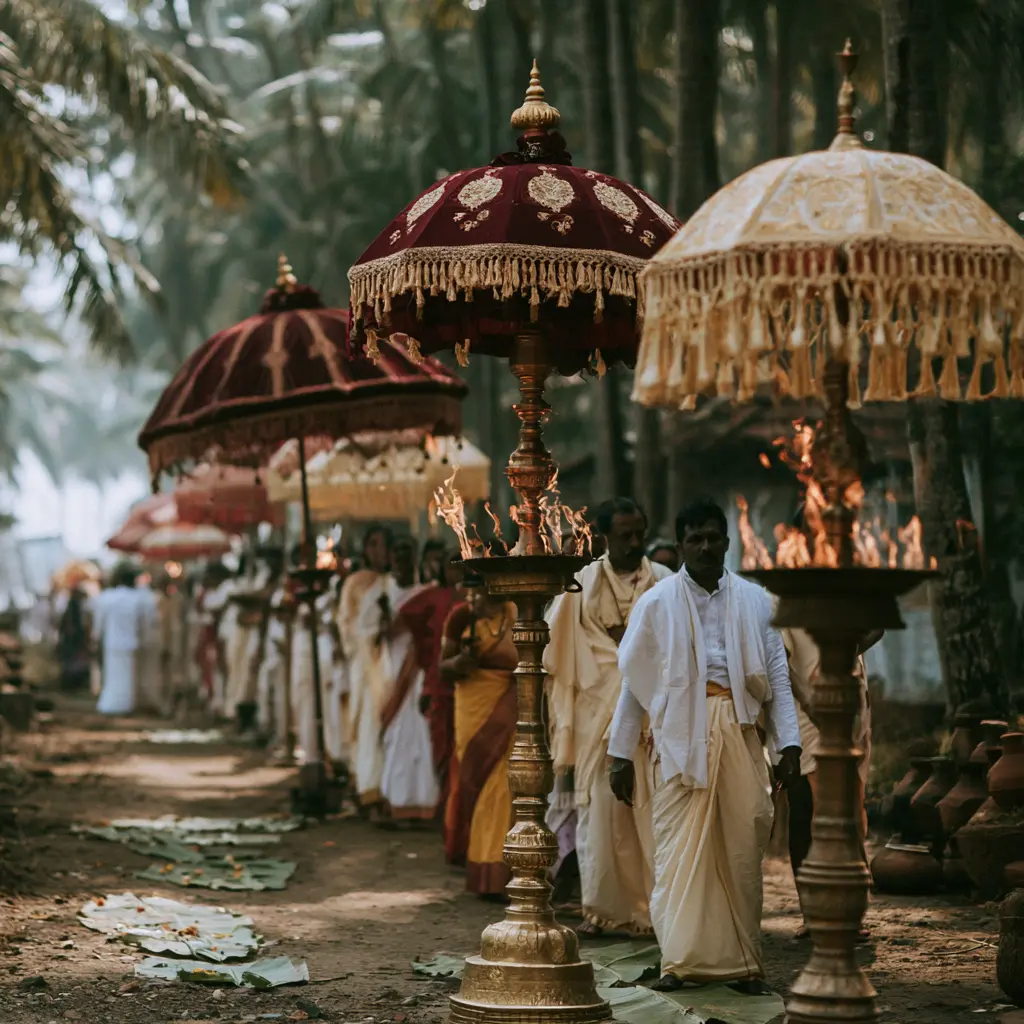
A Kerala wedding that prays in an ancient language and feasts from Malabar soil.
Read alongside: Minnu, Manthrakodi Meaning and Theenmura.
History
'Syrian Christian' does not mean the community arrived recently from modern Syria. The name reflects the historical use of Syriac — a form of Aramaic — in worship. For centuries Kerala's St Thomas Christians prayed in Syriac while farming, trading and cooking like their Malabar neighbours.
Traditional Meaning
Their weddings became a meeting of two worlds: Eastern Christian prayers and chants inside the church, and Kerala lamps, umbrellas, drums and plantain leaves in the celebration outside. These communities — Syro-Malabar, Orthodox, Jacobite, Mar Thoma, Knanaya — differ, so this is a regional tradition, never a universal rule.
Practical Reason
Culture rarely changes all at once when a community adopts a new faith. People kept familiar clothing, food, music and family ceremonies and gave them new religious meaning.
Say it right
Nasrani
nuss-RAH-nee
Kerala's St Thomas Christians
Syriac
SEE-ree-ak
the Aramaic liturgical language
The prayers came through an ancient language. The feast grew from Kerala's soil.
FAQ
Frequently asked questions
Where does An Aramaic Memory come from?
A Kerala wedding that prays in an ancient language and feasts from Malabar soil. It belongs to the Nasrani Wedding tradition of Kerala.
What is the history of An Aramaic Memory?
'Syrian Christian' does not mean the community arrived recently from modern Syria. The name reflects the historical use of Syriac — a form of Aramaic — in worship. For centuries Kerala's St Thomas Christians prayed in Syriac while farming, trading and cooking like their Malabar neighbours.
What does An Aramaic Memory traditionally mean?
Their weddings became a meeting of two worlds: Eastern Christian prayers and chants inside the church, and Kerala lamps, umbrellas, drums and plantain leaves in the celebration outside. These communities — Syro-Malabar, Orthodox, Jacobite, Mar Thoma, Knanaya — differ, so this is a regional tradition, never a universal rule.
Why is An Aramaic Memory done this way?
Culture rarely changes all at once when a community adopts a new faith. People kept familiar clothing, food, music and family ceremonies and gave them new religious meaning.
Can Joy Events & Catering serve An Aramaic Memory at my wedding in Chennai?
Yes. We cook traditional Nasrani Wedding menus for 25 to 5,000 guests across Chennai and Tamil Nadu, including live counters and banana-leaf service. Share your date and guest count on our enquiry form and we will build a menu around it.
Related chapters
Where An Aramaic Memory leads next
The Minnu: The Kerala Christian Wedding Medallion
Another Nasrani Wedding chapter from Kerala
A Kerala thali carrying a Christian cross — a local symbol given a new faith.
Nasrani WeddingManthrakodi Meaning: The Blessed Wedding Saree in Kerala Christian Weddings
Another Nasrani Wedding chapter from Kerala
Manthrakodi is the new saree the groom's family gives the bride, blessed in church and draped over her during the wedding — a sign she now belongs to the family.
Nasrani WeddingTheenmura: The Kerala Christian Celebration Feast
Another Nasrani Wedding chapter from Kerala
Kerala's Christian feast — meat, rice and appam, still served on a plantain leaf.
Nasrani WeddingAppam & Stew: The Kerala Christian Wedding Pairing
Another Nasrani Wedding chapter from Kerala
Crisp lacy edges meeting a gentle coconut curry — fermentation and restraint.
Want this on your table?
We cook these traditions for 25 to 5,000 guests across Chennai.
Get a quote →Bring this tradition to your celebration
Joy Events & Catering recreates authentic Tamil wedding and family feasts
We cook across Chennai, from intimate gatherings to large celebrations — traditional banana-leaf feasts, live counters and custom menus for 25 to 5,000 guests.