The first surprise
Biryani did not begin as tomato gravy with rice
The precise birthplace and first recipe of biryani remain debated. It is safer to speak of a broad Persianate and Indian family of rice-and-meat dishes that included pulao, yakhni rice and layered dum preparations.
These dishes already possessed richness, acidity, heat, colour and aroma. They simply created those qualities with a different collection of ingredients.
Tomato and chilli did not invent biryani.
They later gave many regional biryanis brighter colour, sharper heat, convenient acidity and a thicker masala.
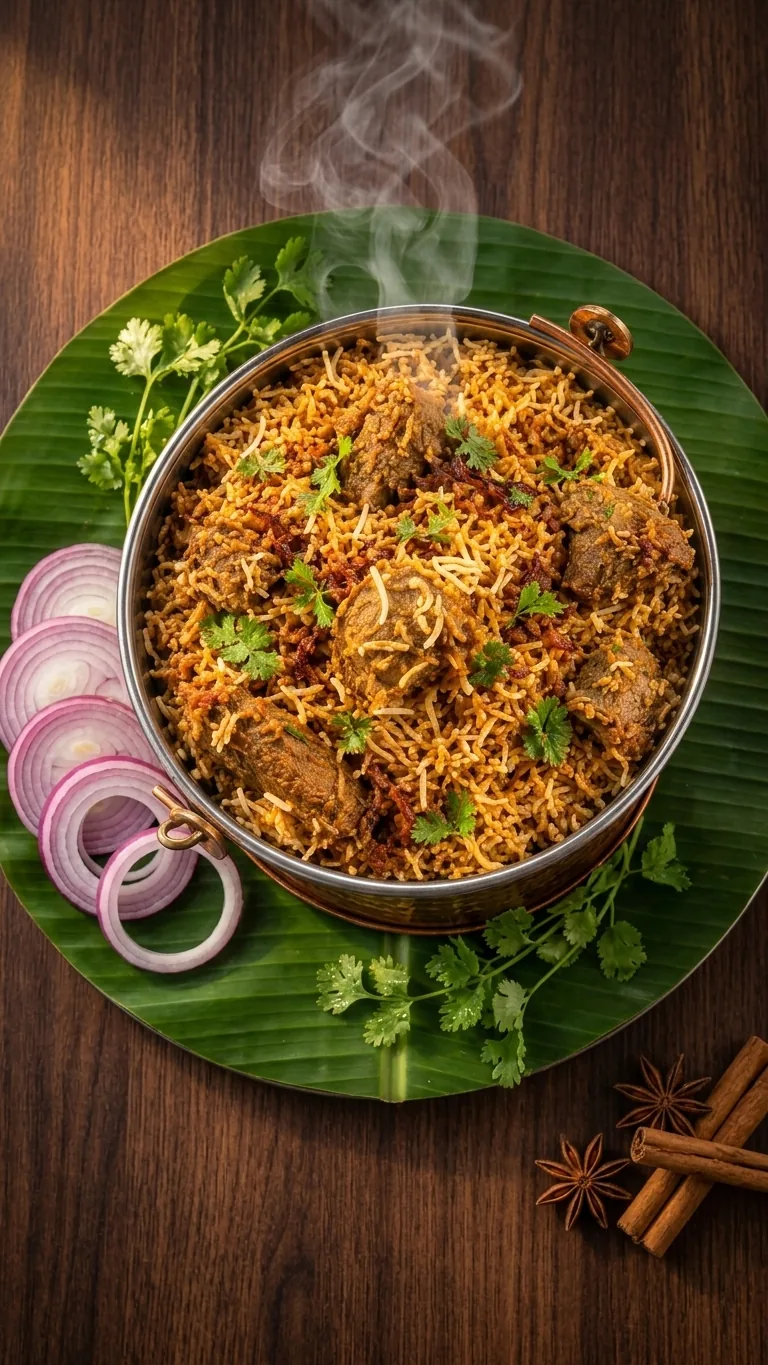
Explore the evolution
Five moments that changed the pot
Rice, meat and stock — no New World spice in sight
Long before tomato or chilli reached Indian ports, cooks across the Persianate and Indian world were already layering rice with meat, stock, fat and fragrance.
Heat came from black pepper and long pepper. Acidity came from yoghurt, tamarind, raw mango and sour citrus. Colour came from saffron, turmeric and deeply browned onions.
Flavour replacement lab
What did cooks use before tomato and chilli?
Tap a modern flavour function to open the older pantry.
Tomato now provides…
Green chilli now provides…
Select a flavour function to reveal the older alternative.
The herb question
Were mint and coriander already there?
Coriander
Native to the region and used in Indian cooking for millennia — both seed and leaf. Its presence in early rice dishes is entirely plausible.
Mint
Well known in Persian and Mughal court kitchens, where it was prized for cooling fragrance in rice and meat preparations.
Both herbs were known in medieval court kitchens — but that does not prove every early rice-and-meat dish used the modern mint-and-coriander combination.
Build the old pot
Create a biryani without New World ingredients
Choose your ingredients. The flavour profile will change as you build.
Your pot
An empty pot
Notice what never appears on this list: tomato, chilli, potato, cashew. The pot still has heat, sourness, colour and perfume.
Taste them side by side
How the experience evolved
Earlier lineage
Pale gold, stock-led and perfumed
- Warm black-pepper or long-pepper heat
- Yakhni, ghee and meat as the foundation
- Yoghurt or sour fruit for acidity
- Saffron, whole spices and browned onions
- Herbs used selectively rather than by one fixed rule
Many later regional versions
Brighter, hotter and masala-forward
- Green chilli for fresh, immediate heat
- Red chilli for colour and deeper fire
- Tomato for tang, moisture and masala body
- Mint and coriander layered more generously
- Distinct regional styles from the Deccan to Tamil Nadu
There is no single modern biryani. Many respected versions still use little or no tomato, and regional methods differ dramatically.
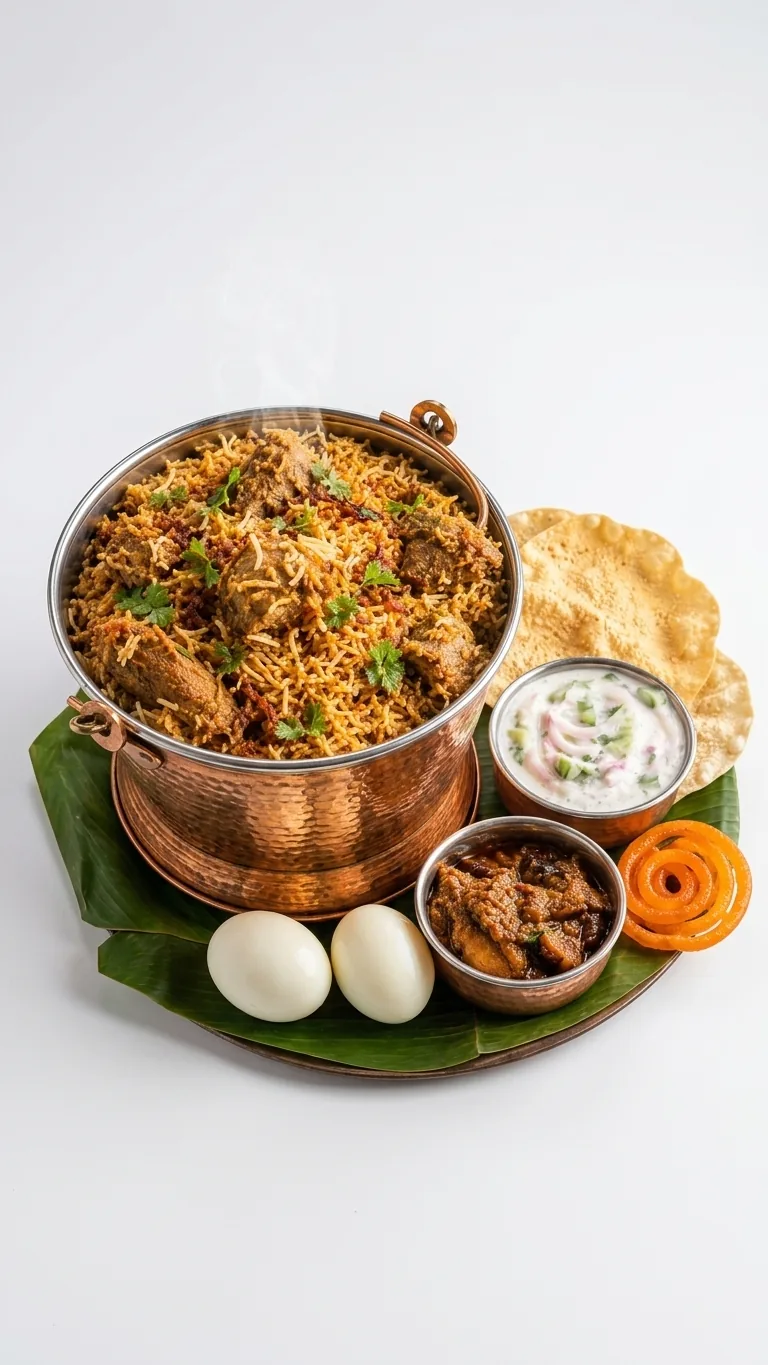
Reader decision
Which biryani should Joy Caterer recreate?
Choose the next Kutty Story tasting experience.
Make your choice and invite other readers to compare the two eras.
The final spoonful
Biryani survived because it was never frozen in time. It absorbed ingredients from trade, royal courts, regional farms, local tastes and family kitchens. Tomato and chilli became powerful new instruments — but the older melody of rice, meat, stock, fat, fragrance, heat and acidity was already playing.
Perhaps authenticity is not refusing change. Perhaps it is remembering every layer.
Bring a memorable biryani feast to your family gathering
Plan a customised Kari Virundhu or biryani celebration with Joy Caterer.
WhatsApp Joy CatererResearch note: “Early biryani” is used here as an accessible label for the pre-modern Indo-Persian and Indian rice-and-meat lineage. The exact origin of biryani and the historical boundary between pulao and biryani remain debated.