Regional Tables · Tamil Nadu · 4 min read
Saiva Saapadu: The Tamil Brahmin Vegetarian Wedding Feast
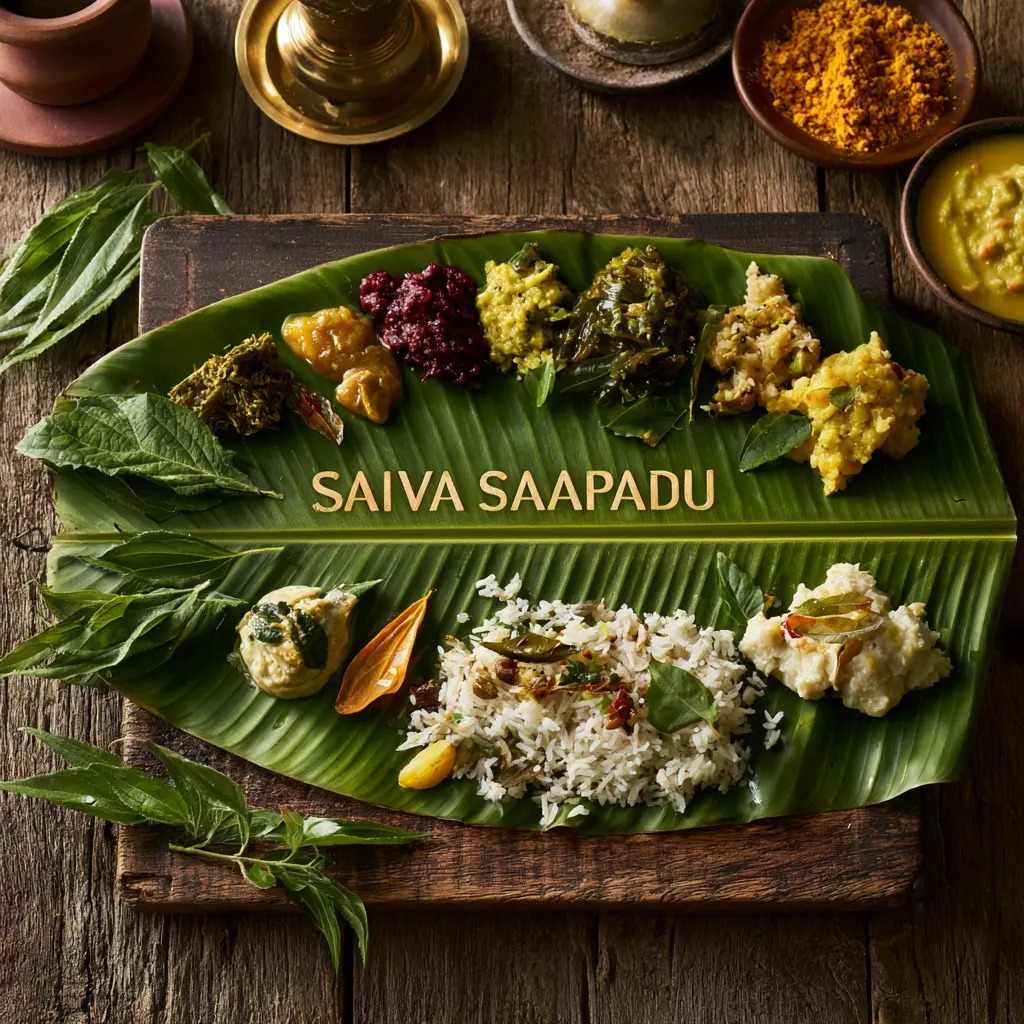
A Tamil Brahmin feast built like a prayer — where no dish is the hero and every one knows its place.
Read alongside: Banana Leaf, Chettinad Virundhu and Nalangu.
History
A traditional Tamil Brahmin feast does not try to overwhelm with one powerful flavour — it builds a journey. The banana leaf becomes an organised dining space: salt, pickle, pachadi, kosumalli, curries and kootu in the upper section, rice below, mixed in turn with paruppu, sambar, rasam and curd as the meal moves along.
Traditional Meaning
Many ceremonial Iyer and Iyengar meals are strictly vegetarian and traditionally avoid onion and garlic, though customs differ by family and are changing. Flavour is built instead from tamarind, coconut, curry leaf, mustard, cumin, fenugreek, pepper, dried chilli and asafoetida — restraint that made cooks more precise, not the food plainer.
Practical Reason
The order isn't decoration. Keeping sides above and rice below stops strong pickles and gravies mixing too early, so each preparation is tasted as intended. Paruppu and ghee come first — mild, coating the palate before the acidity of sambar and the pepper of rasam. The progression works like music: paruppu begins quietly, sambar builds the body, rasam lifts it, curd rice brings it to rest.
Modern Science
Rice and lentils really do make a satisfying nutritional partnership, and curd carries useful cultures — but generations found this by taste and thrift, not amino-acid charts, and curd's end-of-meal role is comfort, not a guaranteed cure for acidity. The richness lies in many small decisions made correctly.
Say it right
Saiva Saapadu
SHY-vuh SAH-pah-doo
a pure-vegetarian feast
Kosumalli
koh-soo-MUL-lee
a moong-dal salad
The Saiva Saapadu does not ask which dish is the hero. The whole leaf succeeds because every dish knows its place.
FAQ
Frequently asked questions
Where does Saiva Saapadu come from?
A Tamil Brahmin feast built like a prayer — where no dish is the hero and every one knows its place. It belongs to the Regional Tables tradition of Tamil Nadu.
What is the history of Saiva Saapadu?
A traditional Tamil Brahmin feast does not try to overwhelm with one powerful flavour — it builds a journey. The banana leaf becomes an organised dining space: salt, pickle, pachadi, kosumalli, curries and kootu in the upper section, rice below, mixed in turn with paruppu, sambar, rasam and curd as the meal moves along.
What does Saiva Saapadu traditionally mean?
Many ceremonial Iyer and Iyengar meals are strictly vegetarian and traditionally avoid onion and garlic, though customs differ by family and are changing. Flavour is built instead from tamarind, coconut, curry leaf, mustard, cumin, fenugreek, pepper, dried chilli and asafoetida — restraint that made cooks more precise, not the food plainer.
Why is Saiva Saapadu done this way?
The order isn't decoration. Keeping sides above and rice below stops strong pickles and gravies mixing too early, so each preparation is tasted as intended. Paruppu and ghee come first — mild, coating the palate before the acidity of sambar and the pepper of rasam. The progression works like music: paruppu begins quietly, sambar builds the body, rasam lifts it, curd rice brings it to rest.
What does modern science say about Saiva Saapadu?
Rice and lentils really do make a satisfying nutritional partnership, and curd carries useful cultures — but generations found this by taste and thrift, not amino-acid charts, and curd's end-of-meal role is comfort, not a guaranteed cure for acidity. The richness lies in many small decisions made correctly.
Can Joy Events & Catering serve Saiva Saapadu at my wedding in Chennai?
Yes. We cook traditional Regional Tables menus for 25 to 5,000 guests across Chennai and Tamil Nadu, including live counters and banana-leaf service. Share your date and guest count on our enquiry form and we will build a menu around it.
Related chapters
Where Saiva Saapadu leads next
The Banana Leaf: South Indian Wedding Plate & Menu Map
How the pure-veg spread is laid out
Where every dish sits on the leaf is no accident — it's menu engineering, centuries before the phrase existed.
Regional TablesChettinad Virundhu
The contrast: a spice-forward regional table
A feast built by travellers — generous, layered, and smelling of roasted spice before the dish arrives.
CeremoniesNalangu: The Playful Post-Wedding Games of Tamil Weddings
From the same table in Tamil Nadu
The playful games after the vows — where a wedding quietly becomes a marriage.
Regional TablesAmbur Biryani: The Seeraga Samba Wedding Favourite
More from Regional Tables
The Nawabs of Arcot's lighter, fierier biryani — built on a tiny grain called seeraga samba.
Want this on your table?
We cook these traditions for 25 to 5,000 guests across Chennai.
Get a quote →Bring this tradition to your celebration
Joy Events & Catering recreates authentic Tamil wedding and family feasts
We cook across Chennai, from intimate gatherings to large celebrations — traditional banana-leaf feasts, live counters and custom menus for 25 to 5,000 guests.